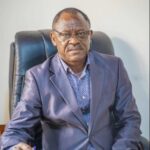
Prof Charles Wondji
Vector Genetics & Genomics, Insecticide Resistance, Malaria & Disease Vector Control
Professor Charles Wondji is Executive Director of CRID and Professor of Vector Genetics at LSTM. A Wellcome Trust Senior Research Fellow with a PhD in mosquito population genetics, he specializes in the molecular basis of insecticide resistance to improve African malaria control.
Profile
Professor Charles Wondji, the Executive Director of Centre for Research in Infectious Diseases (CRID) is also a Professor of Genetics at the Liverpool School of Tropical Medicine (LSTM) and Wellcome Trust Senior Research Fellow in Biomedical Sciences.
He obtained his PhD in 2003 in Cameroon with the French research Institute IRD, working on the population genetics of the malaria vector Anopheles gambiae complex in Cameroon. He later moved in 2004 to the vector group of the Liverpool School of Tropical Medicine as a postdoctoral research associate to study the genetics and molecular basis of insecticide resistance in Anopheles funestus. In 2008 he was awarded a Wellcome Trust Research career development fellow for 5 years to characterise the mechanisms of pyrethroid resistance in natural population of Anopheles funestus in Africa. In 2013 he was awarded a Wellcome Trust Senior Fellowship in Biomedical Sciences to improve the control of this major malaria vector in Africa by developing new molecular diagnostic tools, understanding the evolution of resistance and its impact on control interventions. In 2014, he was promoted to Reader and to Professor in Vector Genetics 2018.
Research
His main research interest is understanding of the biology, genetics and genomics of mosquitoes, vectors of tropical diseases such as Malaria, Lymphatic Filariasis and Dengue. Prof Charles primarily works on Anopheles funestus, one of the major malaria vectors in Africa which, because of the difficulty of rearing it in laboratory, is less studied than Anopheles gambiae. He is currently studying the mechanisms of insecticide resistance in field populations of An. funestus using a genetic mapping approach (Quantitative Trait Loci (QTL) mapping), transcriptomics (microarray, RNAseq), and Whole genome Sequencing (WGS) to detect resistance genes and markers. His research team also uses functional analyses (GAL4/UAS transgenic expression of mosquito genes in Drosophila, the heterologous expression of candidate genes in E. coli to confirm the ability of candidate genes to confer resistance in field populations. Prof Wondji’s aim is to use this knowledge to develop simple molecular assays to detect resistance in field populations. This will greatly facilitate the management of insecticide resistance in Africa.
He is also defining patterns of gene flow and selective sweeps to predict the evolution and spread of resistance while assessing the fitness cost of resistance and its impact on control interventions using experimental huts trials in Africa.
He also has a more general interest in insect genetics and genomics including population genetics studies in mosquito species; investigation of insecticide resistance mechanisms in other malaria vectors (An. arabiensis and An. gambiae) and in the dengue vectors Aedes aegypti and Ae albopictus and the Lymphatic filariasis vector Culex quinquefasciatus.
Teaching
Prof Charles is implicated in the teaching of the BSc programme in Tropical Biology at the University of Liverpool, the joint Masters programmes in Biology and Control of Parasites and Disease Vectors/Molecular Biology of Parasites and Disease Vectors and the Diploma of Tropical Medicine and Hygiene (DTMH) at Liverpool School of Tripical Medicine.
PhD students
| Benjamin Menze | 2nd Year | LSTM,UK |
| Abdullahi Mohammed | 1st year | LSTM, UK |
| Magellan Tchouakui | 3rd Year | University Yaoundé I, Cameroon |
| Leon Mugenzi | 2nd Year | University Buéa, Cameroon |
| Mersimine Kouamou | 2nd Year | University Yaoundé I, Cameroon |
| Amelie Wamba | 1st year | University Yaoundé I, Cameroon |
| Aurelie Yougang | 1st year | University Yaoundé I, Cameroon |
| Armel Tedjou | 1st year | University Yaoundé I, Cameroon |
| Amen Fadel | 1st year | University Yaoundé I, Cameroon |
Professional memberships
- Member of World Health Organisation (WHO) prequalification team on vector control (PQT-VC) since 2017 in charge of assessing new insecticide-based vector control products
- Member of Steering Committee of MARCAD DELTA consortium 2016-2021
- Member of the Management board of the PIIVEC Consortium 2017-2022
- Member of the Malaria Eradication Scientific Alliance (MESA)
- Associate Editor BMC Genomics, Parasites and Vectors, Scientific Reports, Genes journals
- Member of grant review panel of Royal Society Grand Challenge scheme since 2015
- Ad hoc member of the Wellcome Trust Expert review group 5 (ERG5)
- Member of the Wellcome Trust Peer-review College since 2011
Recently, Prof Charles Wondji gained the renewal of his Wellcome Trust Senior Fellowship for the next five years which will continue to support his work within LSTM’s Department of Vector Biology.
The grant titled “Molecular basis of the escalation of insecticide resistance in malaria vectors and its impact on malaria control” is worth £2,262,630 and will cover research carried out both within LSTM and CRID.
This renewal comes in time when CRID is committed to ascertaining genetic ways through which mosquitoes are becoming super-resistant to insecticides and develop new tools in tackling insecticide resistance which is a major barrier to effective malaria control.
Awarded grant
The Centre for Research in Infectious Diseases (CRID) has been awarded a $3.7 million grant by the Bill and Melinda Gates Foundation for the detection of molecular markers of insecticide resistance in malaria vectors in collaboration with the Liverpool School of Tropical Medicine (LSTM).