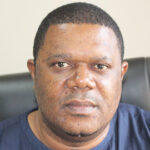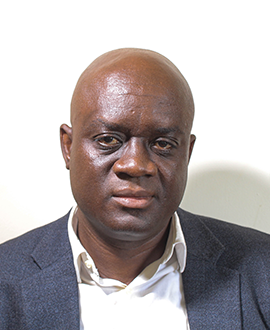
Prof. Blaise Pascal Bougnom
Prof. Blaise Bougnom is a distinguished microbiologist and academic based at the Department of Microbiology, Faculty of Science, University of Yaoundé 1, Cameroon. He earned his PhD with distinction from the University of Innsbruck, Austria, and later advanced his global research footprint as a prestigious Marie Curie Postdoctoral Research Fellow at the University of Birmingham, UK.An international authority on environmental health, Prof. Bougnom’s multidisciplinary research primarily elucidates the dynamics and environmental dissemination of antimicrobial resistance (AMR). His pioneering work investigates the profound public health risks of using untreated wastewater in urban agriculture, mapping how raw sewage irrigation drastically increases transferable antibiotic-resistant genes in soils and food crops like lettuce across African cities.
Profile
Background
Prof. Bougnom is a microbiologist at the Department of Microbiology, Faculty of Science, University of Yaoundé 1, Cameroon. He earned his PhD in Microbiology with distinction from the University of Innsbruck, Austria. Over the years, he has held various academic positions, including Assistant Lecturer and Senior Lecturer, and served as a Marie Curie Postdoctoral Research Fellow at the University of Birmingham (UK) from October 2015 to September 2017. Prof Bougnom teaches undergraduate and graduate-level courses in general microbiology, environmental microbiology, solid waste management, antimicrobial resistance, bacterial genomics, and bioinformatics. I am also actively involved in supervising Master’s and PhD students.
Research:
Areas of interest:
- Environmental and clinical antimicrobial resistance
- Urban agriculture and wastewater reuse
- Climate change and antimicrobial resistance
- Microbial genomics and bioinformatics
- Sustainable agriculture and renewable energy
- Public health and environmental microbiology
Research – an overview of his research areas(s)
Blaise Bougnom has led and participated in several multidisciplinary research projects at both national and international levels. His research primarily focuses on the dynamics and dissemination of antimicrobial resistance (AMR) in diverse environments, including agriculture, aquatic systems, and healthcare settings. He has published extensively in international peer-reviewed journals and has made significant contributions to understanding the public health risks associated with the use of untreated wastewater in urban agriculture. His research emphasizes the environmental dimensions of AMR, particularly in resource-limited contexts.
Current PhD Students:
-
- BESSALA Gabriel Cedric , University of Yaounde I, Cameroon
- ASSENA ABANDA Michèle Debora
- DOOH TONGUE Anaïs Alexandra
Current and past projects
- Investigating the spread of antibiotic-resistant bacteria in aquatic and agricultural ecosystems in Cameroon.
- Assessing the impact of wastewater irrigation on soil microbiomes and the transfer of resistance genes in urban environments.
- Studying the prevalence and dynamics of antimicrobial-resistant bacteria in hospital settings within the context of climate change.
Publications
- Memegni Panta, E. S., Djanda Tcheukaba, S., Samba Aloys, R.J., Bougnom, B.P. (2022). Dynamic of antibiotic-resistant enteric bacteria in the lake Obili-Yaoundé (Cameroon). Journal of Research in Agriculture and Animal Science, 9, 20-24.
- Djanda Tcheukaba, S., Memegni Panta, E. S., Kekeunou, S., Bougnom B.P. (2022). Antibiotic susceptibility profile of bacterial isolates from some fishponds in Yaoundé (Cameroon). Journal of Research in Environmental and Earth Sciences, 8, 18-22.
- Tamema Masse M., Samba Aloys R.J., Tchakounte Betboui B., Bougnom, B.P. (2021). Profile of antibiotic-resistant bacteria isolated from slaughterhouse effluents of EtoudiYaoundé. International Journal of Health Sciences and Research, 11(4), 40-47.
- Tchakounte Betboui B., Tamema Masse M., Bougnom, B.P. (2021). Antibiotic Enteric Resistant Bacteria are Abundant on Lettuce from Urban Agriculture in the City of Yaoundé. International Journal of Trend in Scientific Research and Development, 5, 708-712.
- Bougnom, B.P., Thiele-Bruhn, S., Ricci, V., Zongo, C., Piddock, L.J.V. (2020). Raw wastewater irrigation for urban agriculture in three African cities increases the abundance of transferable antibiotic resistance genes in soil, including those encoding extended spectrum β-lactamases (ESBLs). Science of the Total Environment, 698, 134201.
- Bougnom, B.P., Thiele-Bruhn, S., Ricci, V., Zongo, C., Piddock, L.J.V. (2019). Highthroughput sequencing data and antibiotic resistance mechanisms of soil microbial communities in non-irrigated and irrigated soils with raw sewage in African cities. Data in Brief, 27, 104638.
- Bougnom, B.P., Zongo, C., McNally, A., Ricci, V., Etoa, F.X., Thiele-Bruhn, S., Piddock, L.J.V. (2019). Wastewater used for urban agriculture in West Africa as a reservoir for antibacterial resistance dissemination. Environmental Research, 168, 14-24.
- Bougnom, B.P., Piddock, L.J.V. (2017). Wastewater for Urban Agriculture: A Significant Factor in Dissemination of Antibiotic Resistance. Environmental Science and Technology, 51(11), 5863-5864.